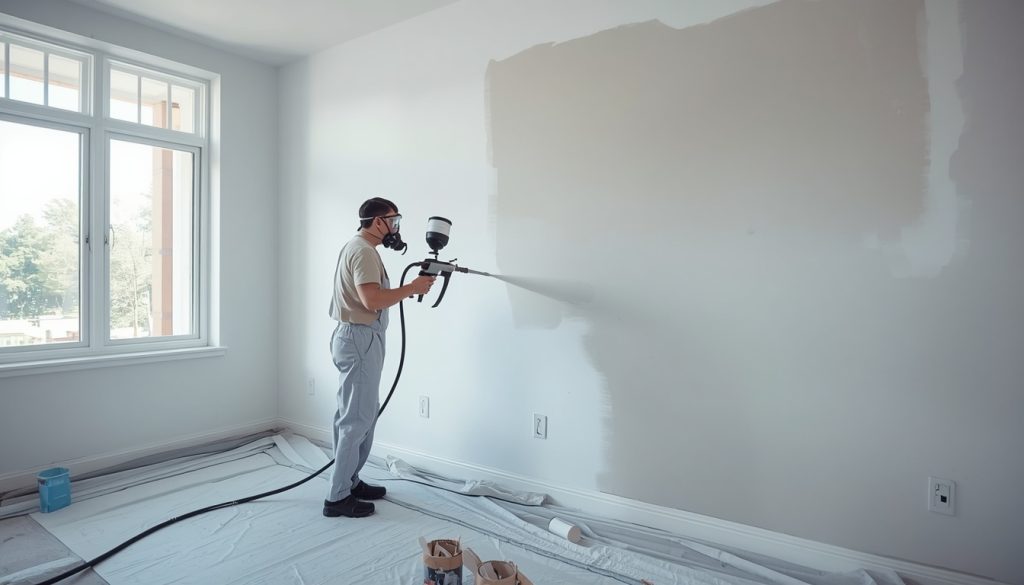
Have you ever wondered how experts finish huge surfaces with paint that is level and smooth? It takes more than just tools to do spray painting. It also requires control and ability. Acquiring the proper techniques can enhance both speed and quality. We examine Professional Paint Spraying Techniques employed by industry professionals in this guide. These techniques aid in producing long-lasting, uniform, and clean results for residences and businesses. An appropriate approach is crucial when working on walls, furniture, or outside projects. Expert painters at Super Painting Co focus on accuracy and quality. This helps them meet client demands and deliver reliable painting solutions.
Getting the Surface Ready for a Smooth Spray Finish
A clean spray job starts with proper surface preparation. Dust, oil, and old loose paint must be removed from the surface. Before starting the job, holes and cracks must be properly patched. Moreover, sanding is important, as it aids paint application. A smoother surface will ensure a better finish and uniform coating. Before starting the task, the moisture content is also determined by experts. This helps avoid any unnecessary reworking in the future and saves time as well. A properly prepared surface helps in good bonding. This gives long-lasting effects in both interior and exterior painting jobs.
Selecting the Best Spray Equipment
Selecting the right tools is essential for producing high-quality work. Different surfaces call for different spray guns and nozzles. Paint flow can be controlled, and waste can be decreased with the right setup. For a smooth finish, air pressure adjustments are also important. Using subpar tools might have a negative impact on the outcome. The optimal performance is only possible when the equipment used is suited to the kind of job being done. Paint Spraying Techniques will assist painters in being more precise and efficient. Besides, it is easy to apply paint on larger areas such as furniture and walls.
Masking Correctly Before Painting
One crucial aspect in protecting undesirable regions is masking. It keeps paint from spreading where it isn’t needed and keeps edges tidy. Doors, windows, and floors are painted using tape, plastic sheets, and covers. When cleaning, once a task is completed, careful masking saves time. Additionally, it enhances the painted surface’s ultimate appearance. Super Painting Co makes sure that every job is properly prepared in order to produce tidy and expert results. Additionally, effective masking keeps the workspace tidy and minimizes errors. For both small and large painting projects, this stage is crucial.
Effectively Managing Spray Patterns
Even paint distribution can be achieved with careful control over spray patterns. To prevent thick or thin areas, painters must move the spray gun steadily. To guarantee complete coverage with no gaps, overlapping strokes are used. While working, the distance from the surface should stay constant. Patchy outcomes may result from uneven movement.
Important points:
- Maintain a steady hand motion
- Keep the same distance from the surface.
- Slightly overlap each spray pass
- Don’t spend too much time in one place.
Effective control lowers paint waste and enhances finish quality. Additionally, it aids in creating a polished and seamless surface appearance.
Modifying Spray Distance and Pressure
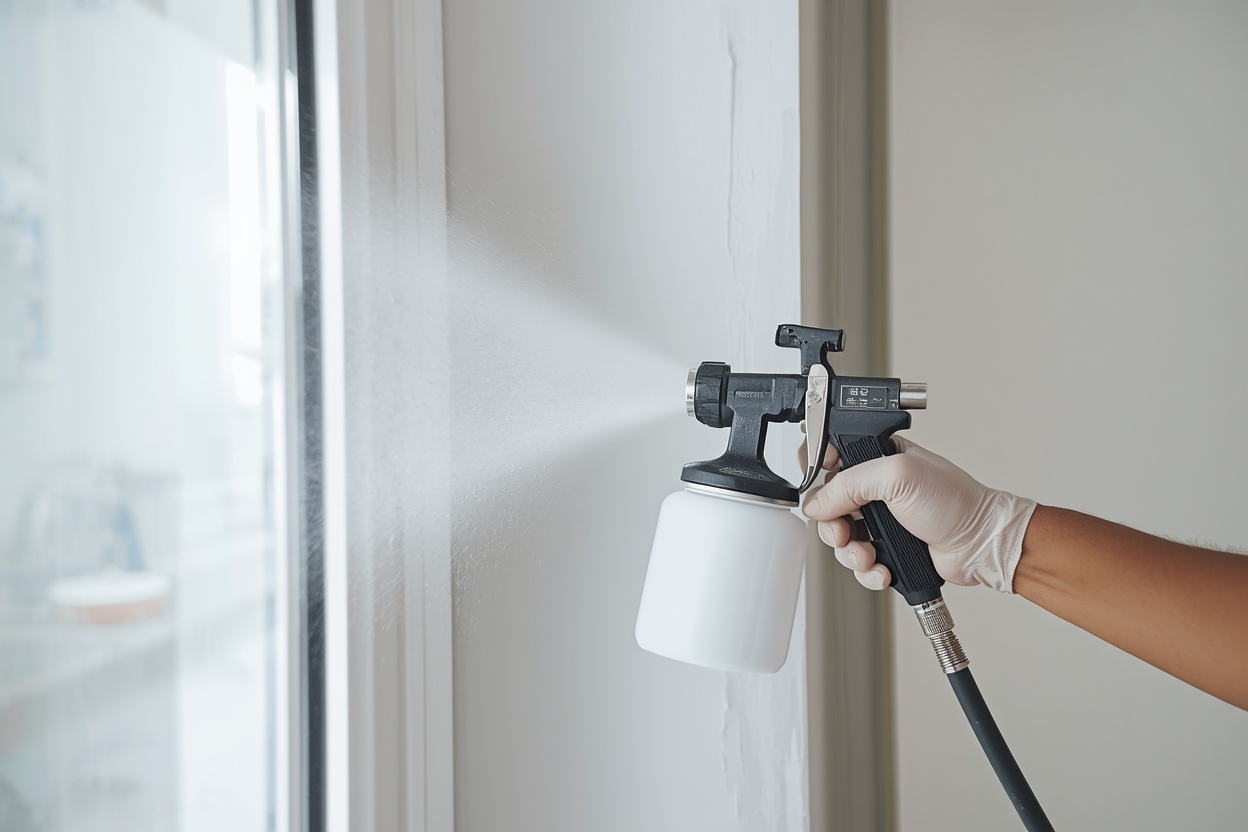
For a smooth finish, the right pressure settings are crucial. Low pressure might result in uneven coating, while excessive pressure can induce overspray. Painters modify parameters according to paint thickness and surface type. For optimal effects, spray distance should also be carefully regulated. People typically demand expert work with appropriate finishing quality when they look for a Painter near me. Professionals concentrate on proper technique and settings because of this. Uniform covering is achieved with balanced pressure and consistent distance. This process enhances the painted surface’s longevity and beauty.
Cleaning and Coating Procedure
The final coating gives the surface a polished, finished appearance. For increased durability and luster, a thin additional layer is frequently applied. It aids in shielding the surface from deterioration and weather. Tools must be thoroughly cleaned after completion in order to preserve their functionality. Paint leftovers should be securely preserved for later use.
Steps for cleanup:
- Spray guns and nozzles should be clean.
- Carefully remove the masking materials.
- Look for areas that were overlooked.
- Properly dispose of garbage.
Long-lasting results are ensured by an appropriate finishing procedure. Additionally, it improves overall efficiency by keeping the workstation tidy and prepared for the next jobs.
Conclusion
However, with training and using the appropriate technique, spray painting can be a technique that improves with time. From surface preparation to the final paint application, every step of the process is crucial. Every stage has a direct impact on the final product’s overall quality. Using correct techniques makes it possible to create a smooth, clean, and durable product. On every job, these techniques cut down on waste and save time. All surfaces will look more polished and have greater accuracy when Professional Paint Spraying Techniques are used. Super Painting Co is committed to upholding high painting standards. For both residential and business needs, it produces dependable and durable solutions.
Want to see more professional painting projects, expert tips, and real transformations? Visit our Facebook page and stay updated with the latest painting ideas and project inspiration.
FAQS
- Proper Paint Spraying Techniques: What Are These?
These proper techniques are used by experts in order to get even, smooth, and high-quality paint finishes on different surfaces.
- What is the significance of surface preparation before spray painting?
It ensures a perfect and lasting surface along with better paint adhesion.
- How does the spray distance affect painting results?
While an incorrect distance can result in uneven or patchy coverage, an appropriate distance provides even coverage.
- Why is masking necessary when painting?
During painting, masking keeps edges neat and sharp while shielding undesired regions.
- How is spray painting enhanced by pressure control?
Smooth and uniform paint application is ensured by balanced pressure, which also avoids overspray.